Baby Doll
Artifact of the Month - February 2026
February is African American History Month, a time to commemorate the history, achievements, contributions, and struggles overcome by African Americans in the United States. Other countries recognize this as Black History Month.
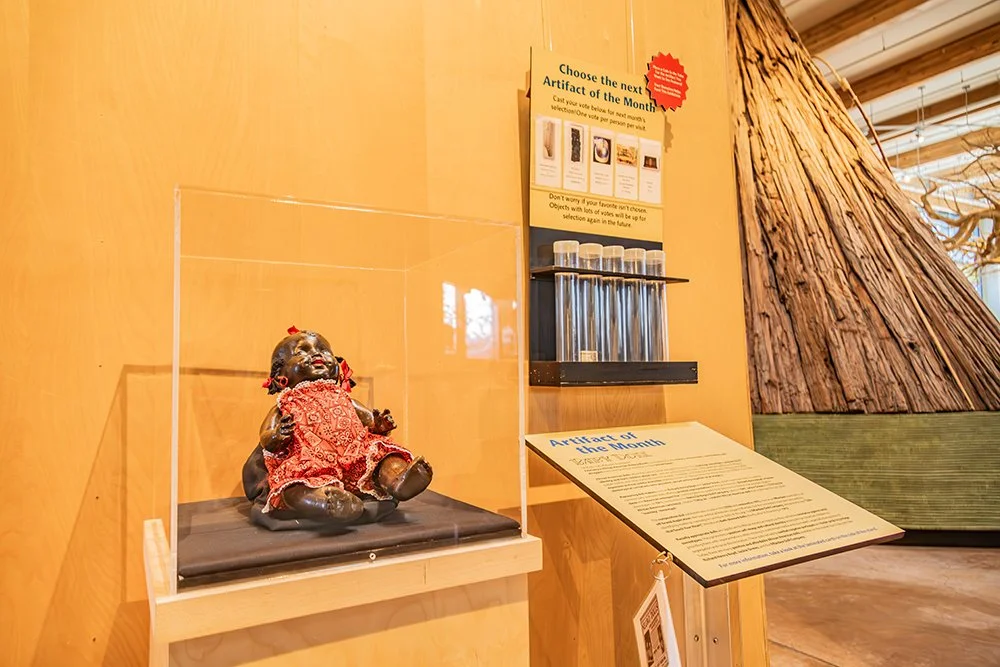
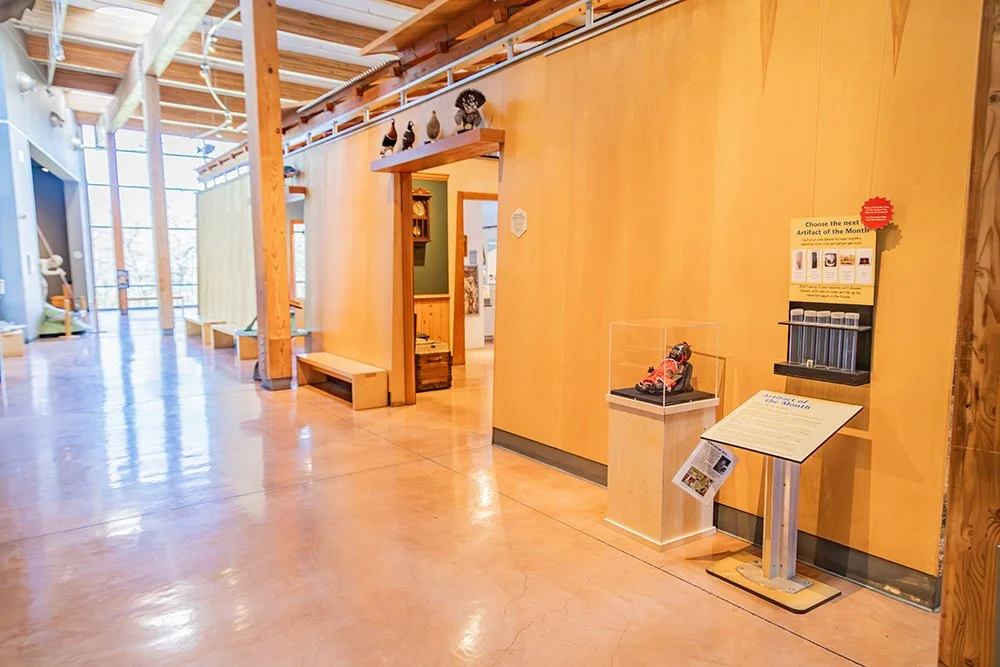
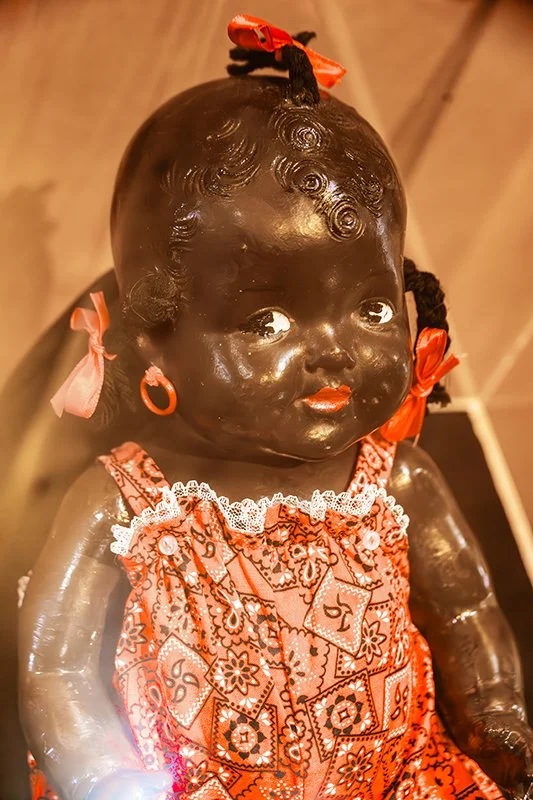
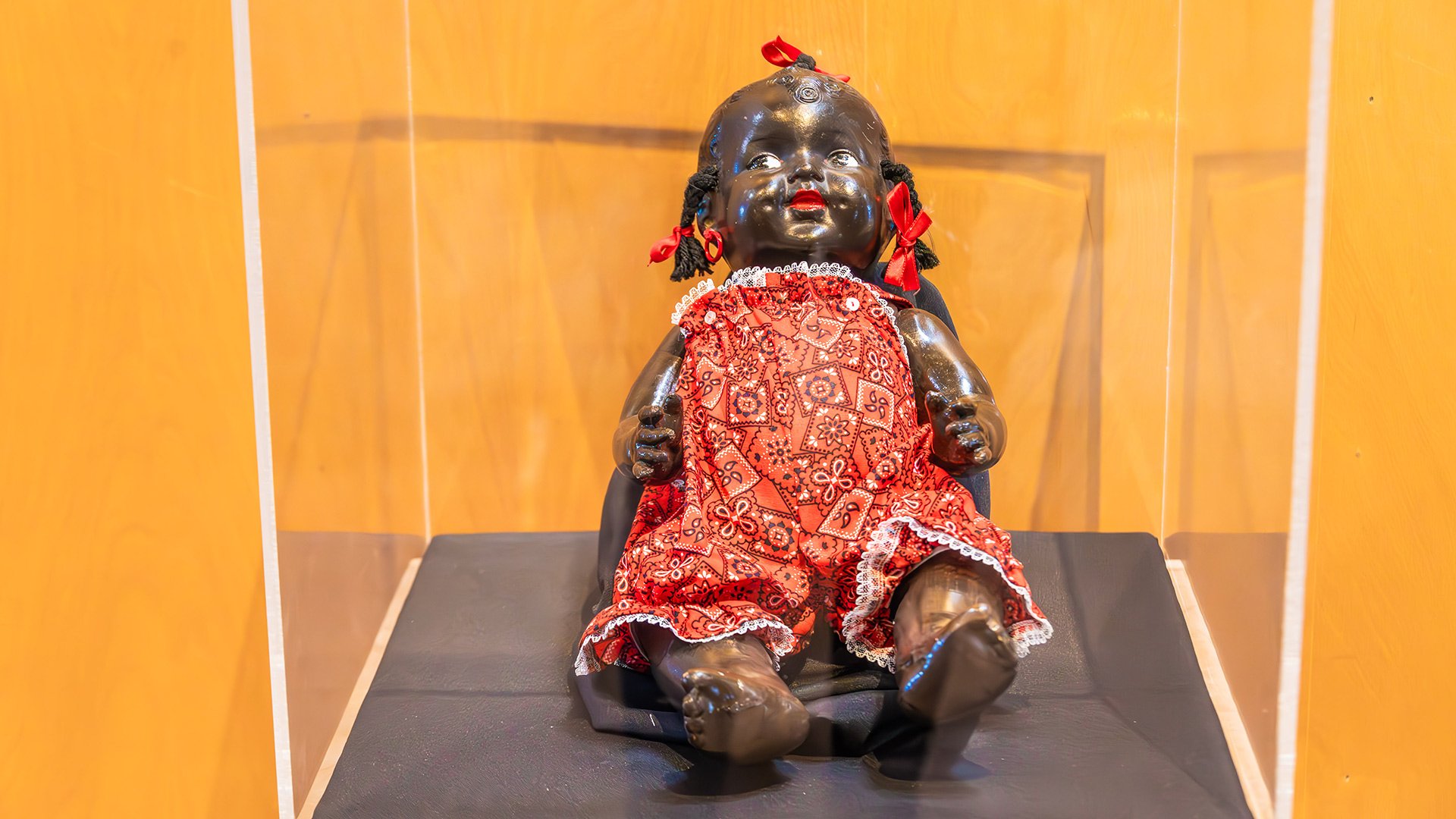
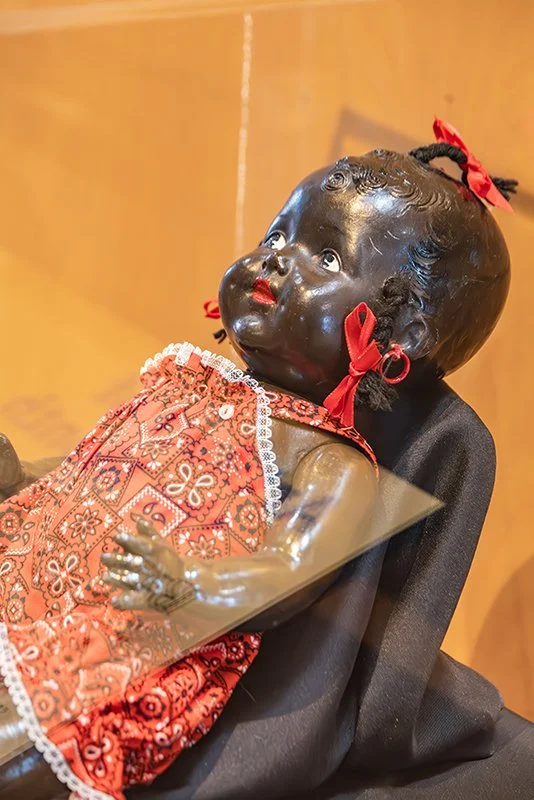
We were excited to discover an adorable doll in Turtle Bay’s Permanent Collection and learn how it connects to a larger, more significant story. Museum records indicate that this composition doll was made in the 1930s and restored in 1975. During the restoration, she received new clothing and accessories as well as repairs to her broken hand and damaged skin. We believe she is either an Effanbee brand doll or an off-brand duplication. While her hair and facial features suggest she could be an Effanbee, the restoration may have obscured any identifying markings normally occurring on dolls of this age. The Effanbee Doll Company, whose motto was “Dolls that Touch Your Heart,” incorporated dark-skinned dolls into its collection shortly after its founding in 1912.
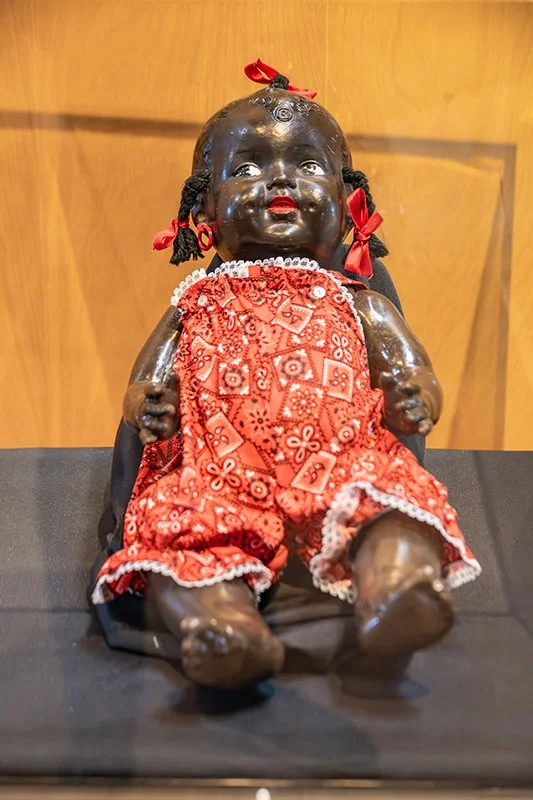
African American dolls have a rich history that reflects the country’s social and political dynamics. They challenge stereotypes, promote Black identity, teach children about race – and are just for play! Prior to the early 1900s, most African American dolls were handmade using scraps of fabric, papier mâché, and other available materials. Although some European companies produced African American dolls, they were often expensive and difficult to access. Even then, stereotypical caricatures were common, perpetuating negative racial imagery.
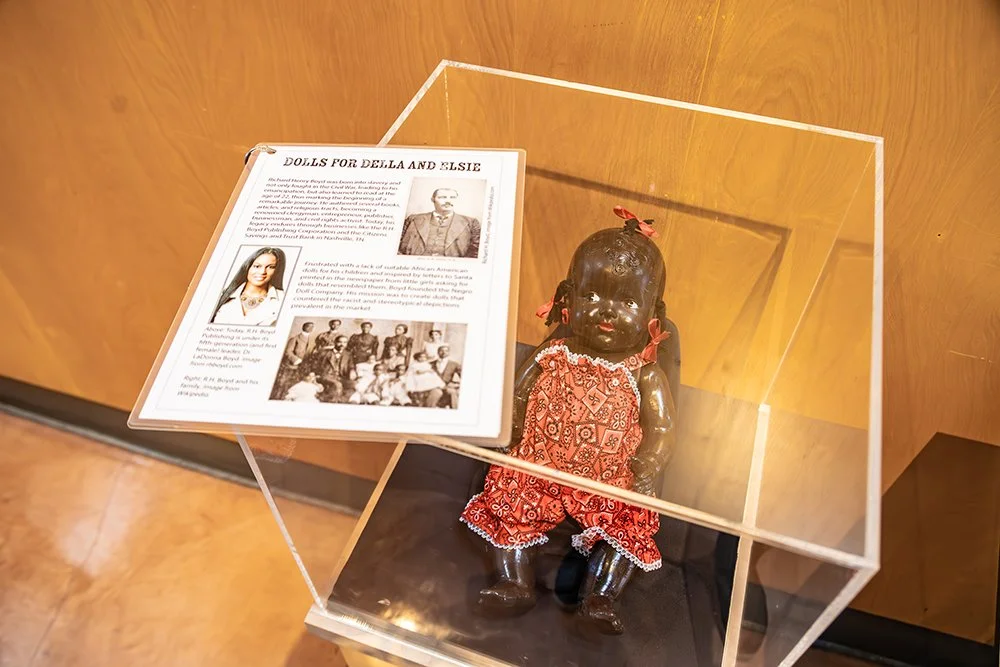
Pioneering doll makers, like Richard Henry Boyd and Jackie Ormes, played significant roles in creating commercially available dolls that offered more positive representations of African Americans. Boyd, a formerly enslaved American entrepreneur, founded the National Negro Doll Company in 1911 after struggling to find dolls for his children that did not rely on negative caricatures. In 1947, Jackie Ormes, the first female African American cartoonist, introduced Patty‑Jo, a realistic doll that challenged pervasive female stereotypes.
Ormes’ comics focused on empowered African American women and addressed social and political issues with humor and wit. Her Patty‑Jo character became so popular that the Terri Lee Doll Company collaborated with Ormes to create a doll inspired by the character, with Ormes hand‑painting facial features and designing the fashionable clothing. Today, Patty‑Jo dolls are prized collectors’ items.
Like many artifacts, the lovely doll in Turtle Bay’s collection connects to a much larger story. Visit the Museum to see February’s Artifact of the Month and learn more about these pioneering doll makers.