
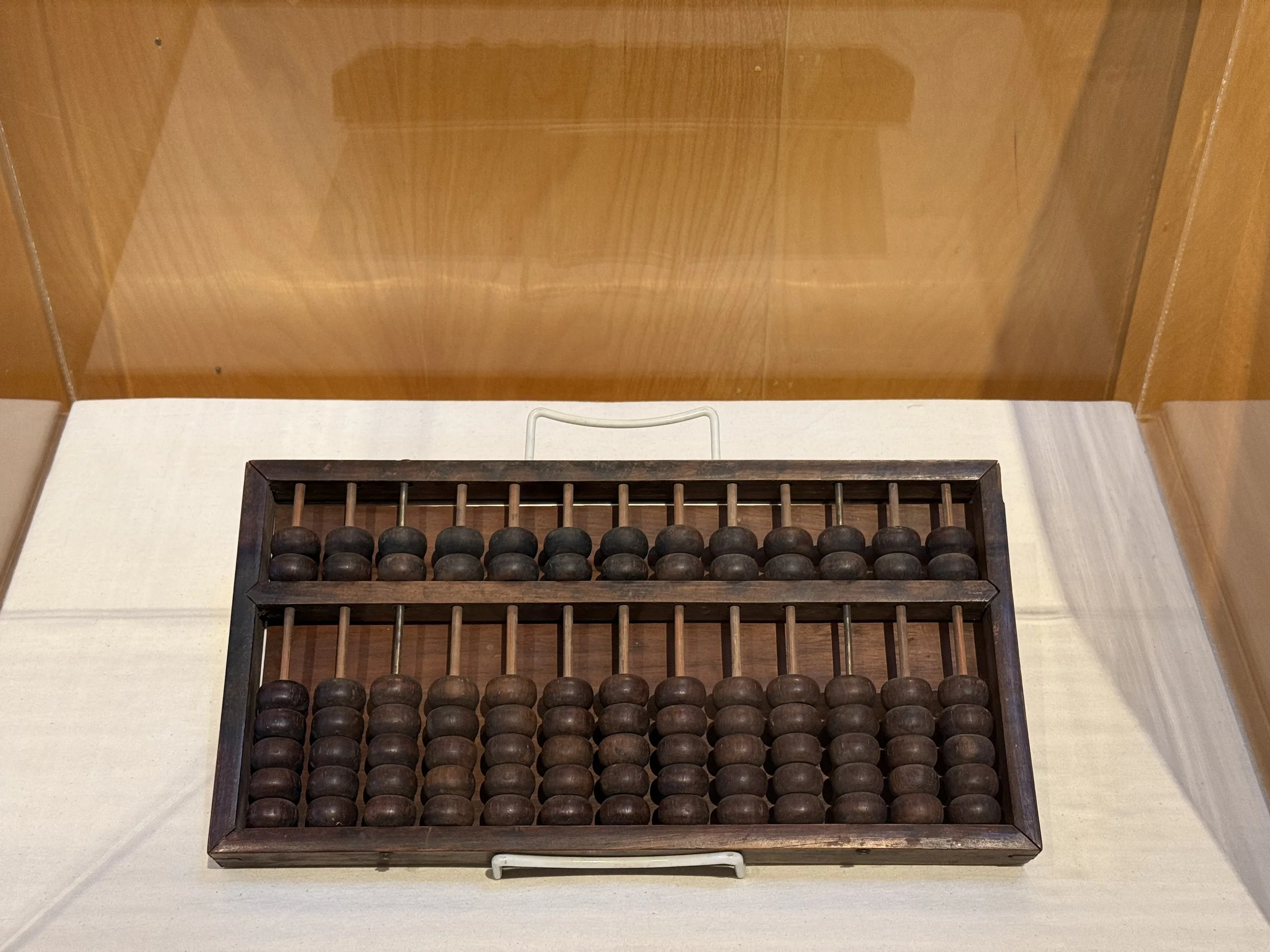
Chinese Abacus
Artifact of the Month Blog - November
1987.15.14 - Gift of John Eide
Julia Cronin, Curator of Collections and Exhibits
How many different stories can we tease out of an object that comes to us with very little documentation?
Researching an Artifact of the Month can be a bit of a “choose your own adventure” for the Turtle Bay staff and volunteers who produce this exhibition. Or, as we say, “So many rabbit holes, so little time.”
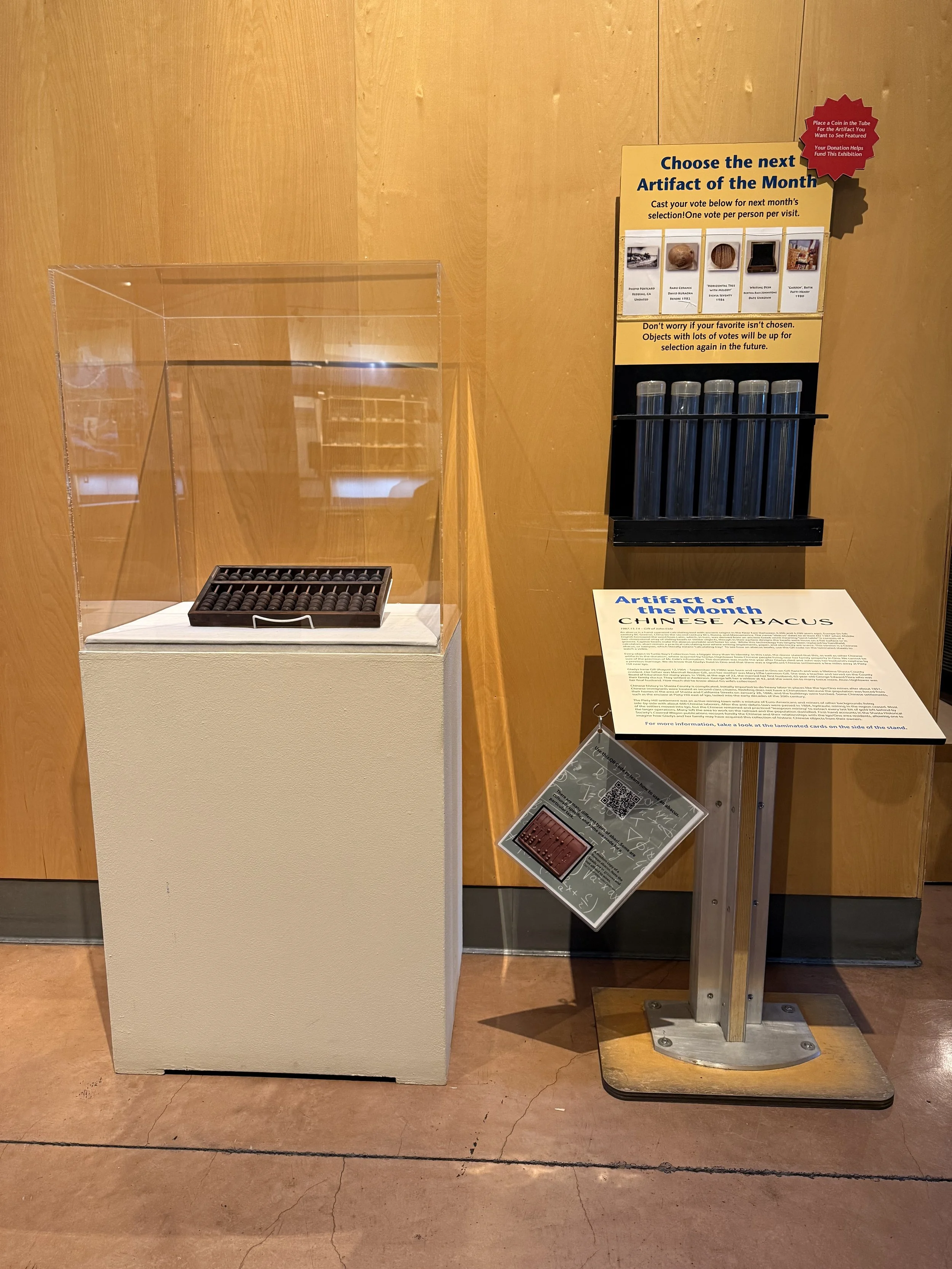
This month, we feature a Chinese abacus that dates to the late 19th or early 20th century. It came to the Redding Museum of Art and History in 1987 with several other Chinese artifacts purportedly from the Ono area of Western Shasta County.
Immediately, two interpretive foci came to mind: 1. What is an abacus, how does it work, and how do we know this one is Chinese? And 2. Who collected these objects and how did they get them? Both are equally fascinating and deserve much more expansive interpretation than the Artifact of the Month format allows so, of course, I tackled both.
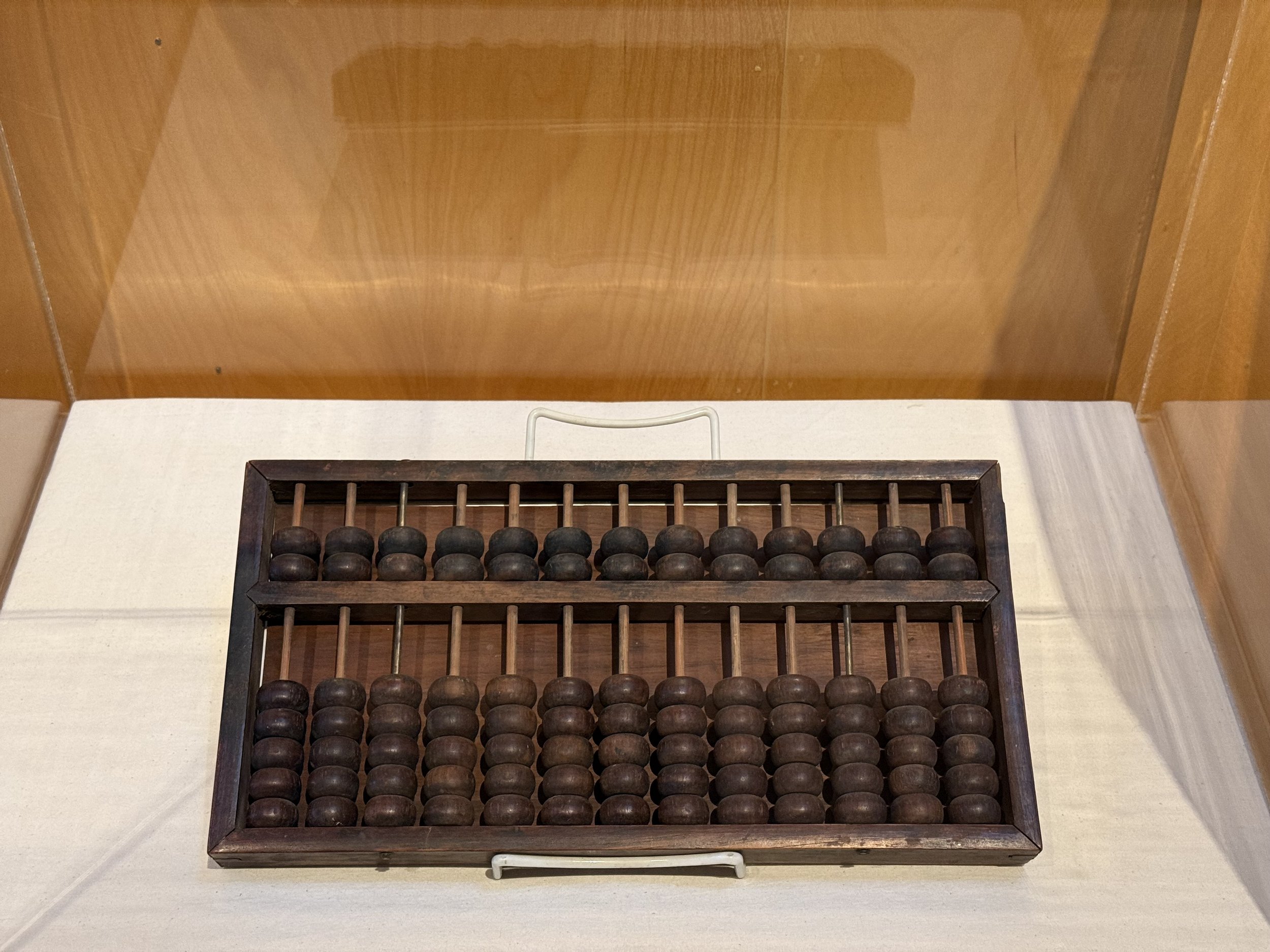
Grossly simplified, “An abacus is a hand-operated calculating tool with ancient origins in the Near East (between 4,300 and 4,700 years ago), Europe (in fifth century BC Greece), China (in the second century BC), Russia, and Mesoamerica. The name ‘abacus’ dates to at least AD 1387 when Middle English borrowed the word from Latin, which, in turn, was derived from an ancient Greek word meaning sand table.” You can learn more about abaci in the exhibition, where we also provide a QR code linked to a video demonstrating how they are used. In the process of researching this exhibition, I learned that I possess both a Chinese abacus, or suanpan, and a Japanese abacus handed down in my family. How we got them is anybody’s guess.
Who collected these artifacts? The donor stated that they were acquired by Gladys Irene Gill Hightower (8/12/1904 – 8/29/1986) from Chinese people living near her family property in Ono. We cannot be sure of the precision of Mr. Eide’s information. The donation was made the year after Gladys died and the donor was her husband’s nephew by a previous marriage. We do know that Gladys lived in Ono and that when she was young, there was a significant Chinese settlement a few miles away at Piety Hill near Igo.
Infamously, most of the Chinese in Shasta County were forced out in a violent overnight raid on January 28, 1886, and during subsequent sweeps. The Piety Hill settlement, however, was not part of the initial raid and survived until the 1920s when there were just a few people left. First person accounts in the Shasta Historical Society’s Covered Wagon recount relations between the Piety Hill residents and the surrounding Euro-American farmers and ranchers, including tales of candy, gifts, and feasts on Chinese New Year. How much of this is the recollection of childhood viewed through rose-colored glasses, and how much is accurate history we will never know. No one recorded how the Chinese felt about the relationship.
Gladys grew up in Ono on Gill Ranch. Did she get these objects from her family? Did she acquire them on her travels back and forth past Piety Hill to Anderson where she lived as a married woman? Her first husband was a doctor. Did he receive gifts from his patients? We might never know the answer. Though she married thrice, she never had children and Mr. Eide did not share any stories about her that were recorded in the donation folder. There is a lesson here – as with the history of my family abaci, if you don’t write it down it will be lost. Over time, objects without information lose their meaning and become “stuff.”
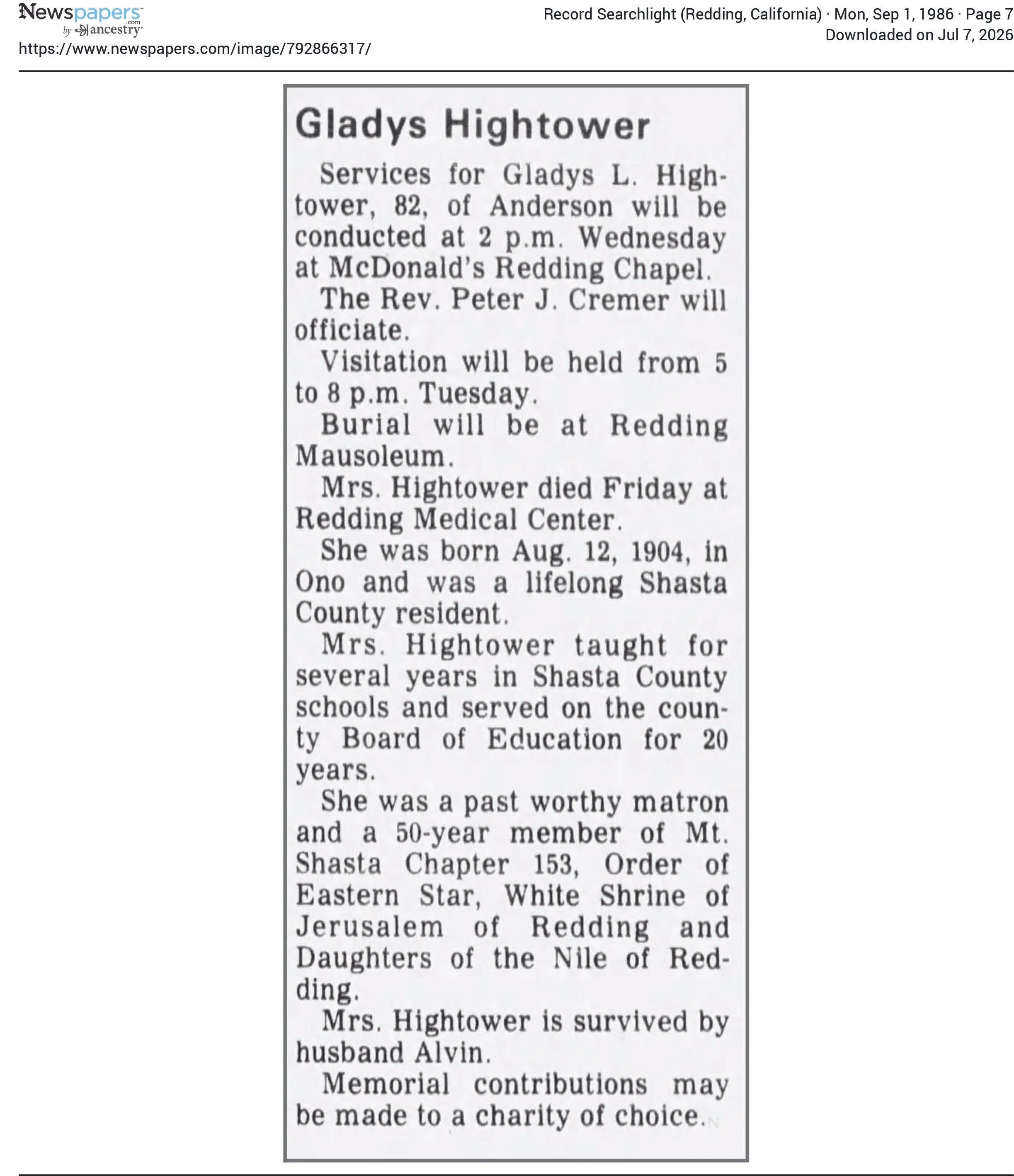
Discover more about Glady and the Chinese of Piety Hill inside the Turtle Bay Exploration Park Museum during the month of November.