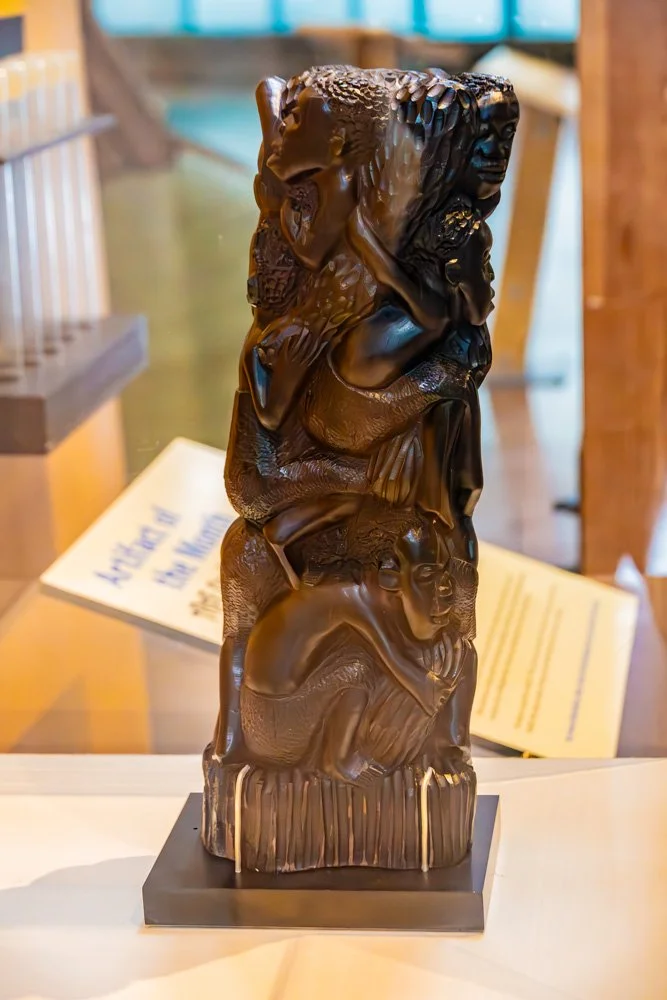
Makonde Tree of Life Sculpture
Artifact of the Month - May2026
This stunning Makonde carving has been in the running for Artifact of the Month for a while, and has finally risen to the top of our visitor poll! It is a striking representation of culture, unity, and continuity.
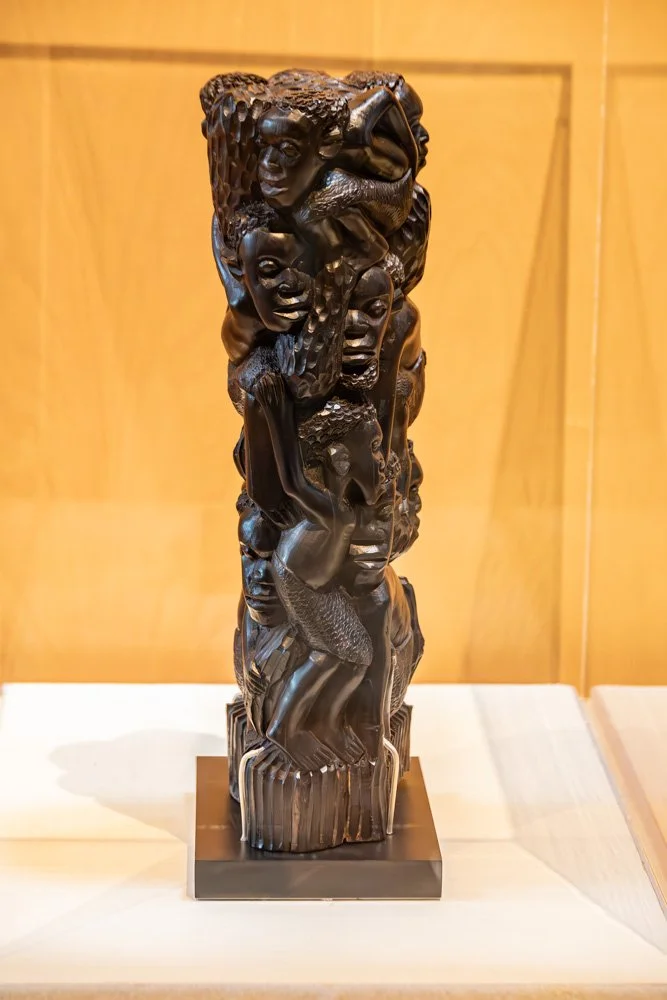
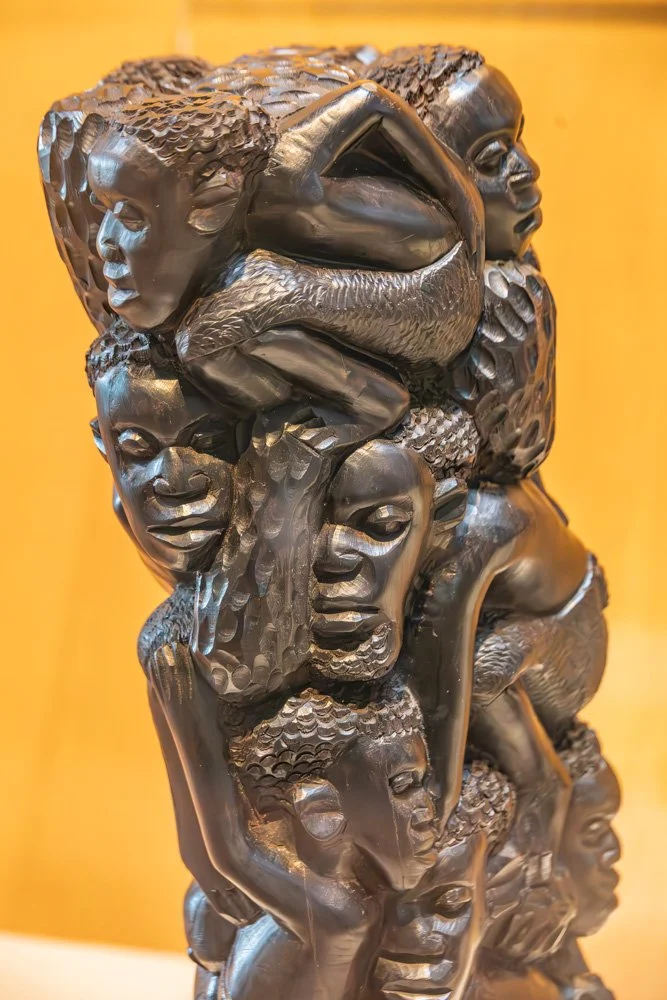
The ujamaa (“tree of life” or “family tree”) style reflects the Makonde’s matrilineal and ancestor-focused society. The form typically includes a maternal figure at the base, surrounded by intricately intertwined figures symbolizing mutual support within the community, the bonds of familyhood, and the enduring connection between generations.
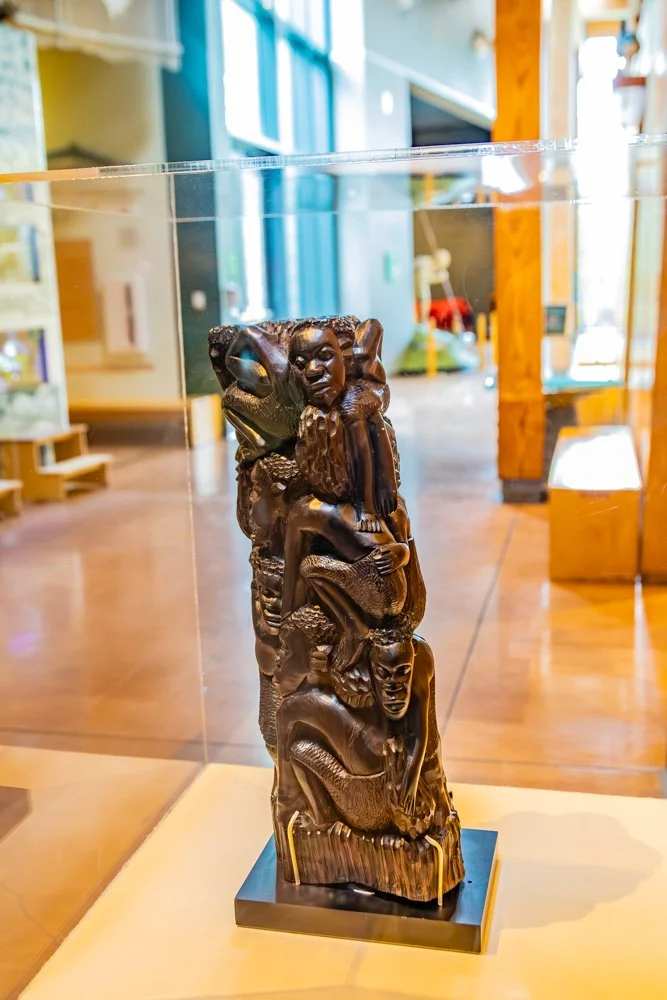
Makonde artists carve ujamaa sculptures, such as this one, from a single piece of wood, often ebony or mpingo (African blackwood), both prized for their density and durability, and rich dark luster. Working with these hardwoods requires exceptional skill, and Makonde artists continue to use traditional tools such as adzes, chisels, and knives.
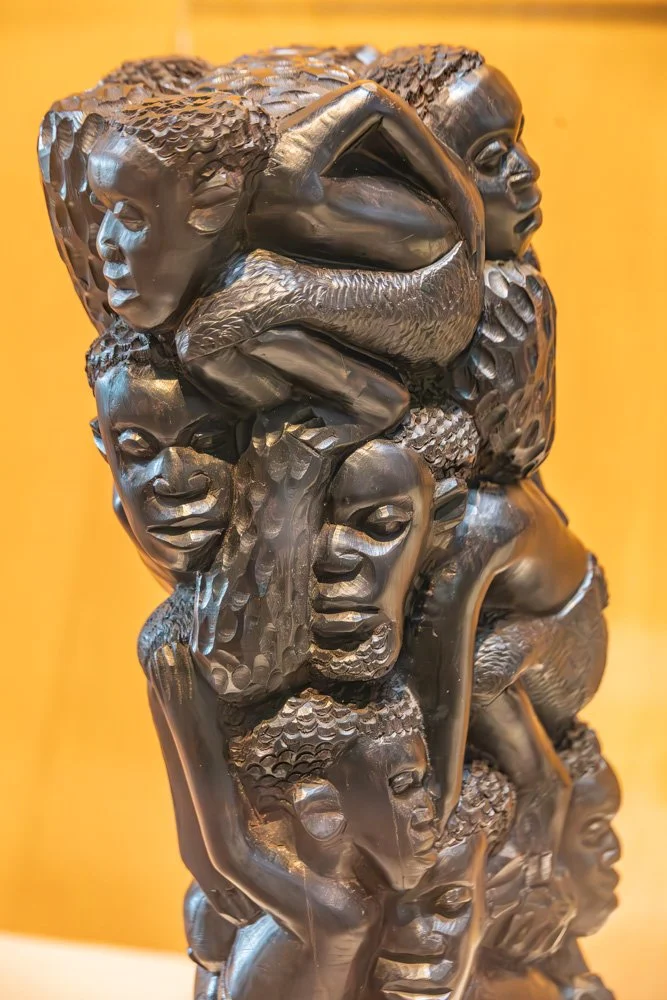
The Redding Museum of Art and History acquired this example in 1982. It bears a label reading, “Hand carved in Tanzania”, along with the word or name “EMSIBI”. Despite extensive research, it remains unclear whether Emsibi refers to the artist or a workshop.
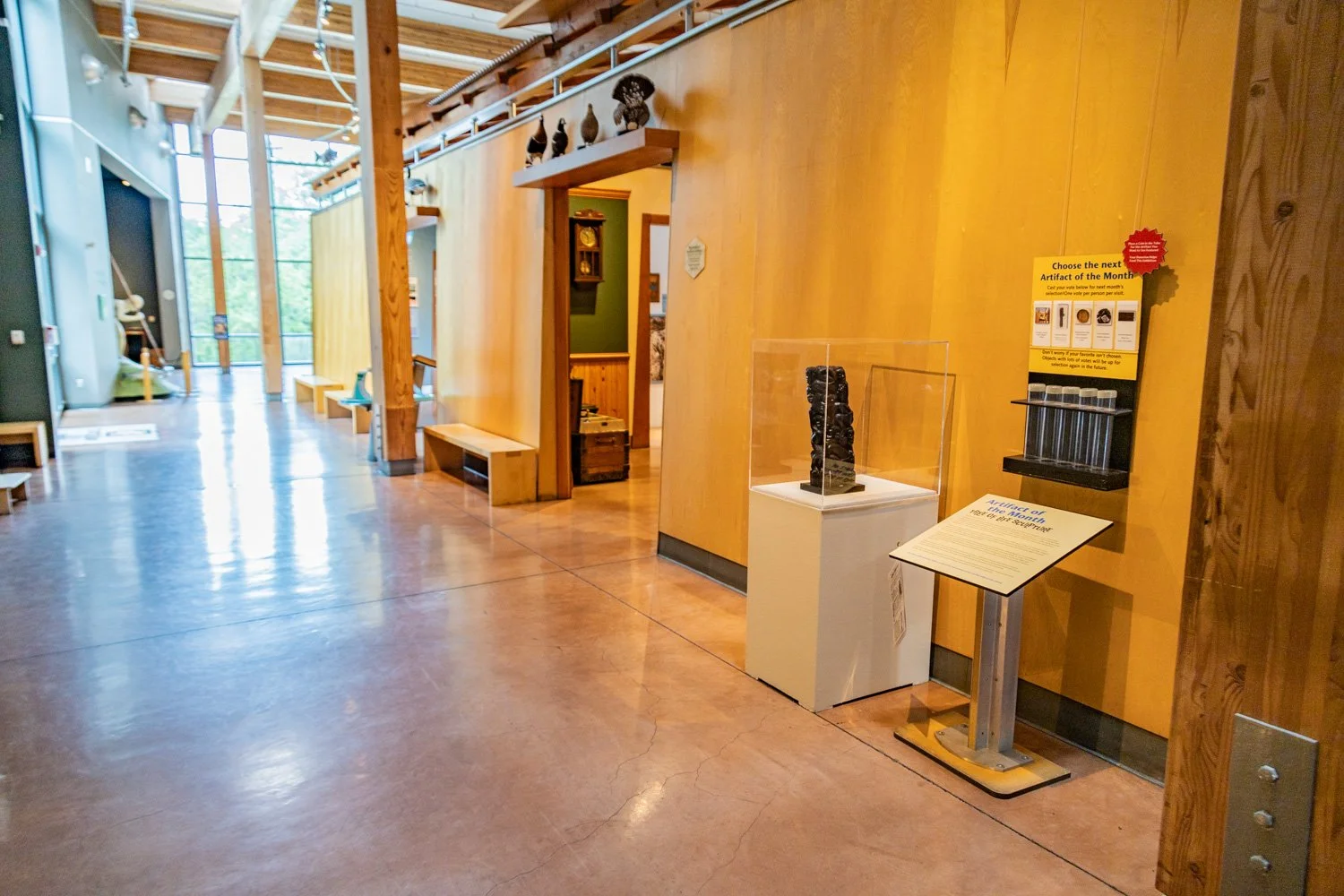
Visit the Museum at Turtle Bay Exploration Park during the month of May for a rare opportunity to see this spectacular carving in person. Based on Museum records, it is the first time it has been on exhibit!
Artifact of the Month – May 2026
Makonde Tree of Life Sculpture
1982.8.53 Museum Purchase
Amanda Kramp, Assistant Curator of Collections and Exhibits