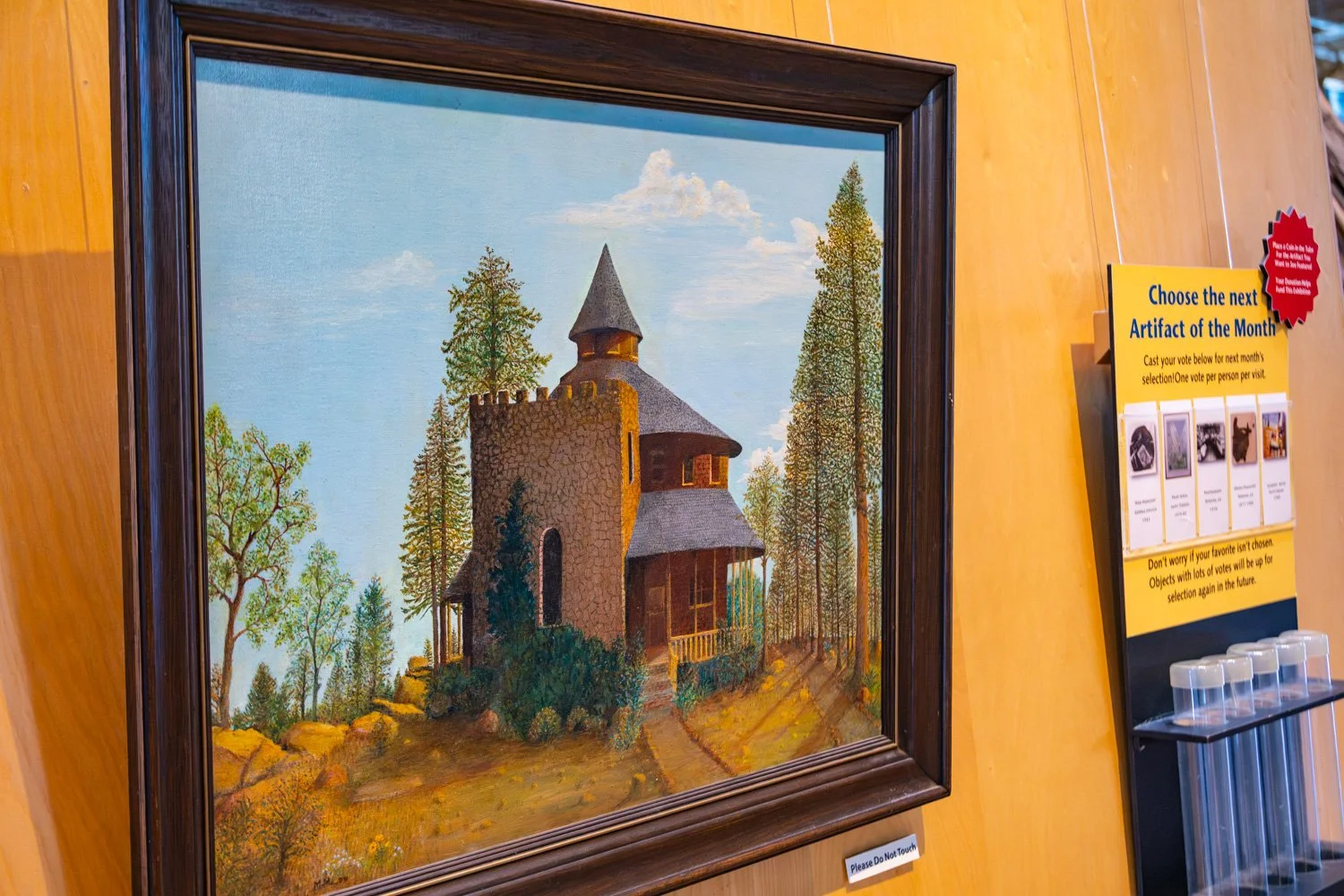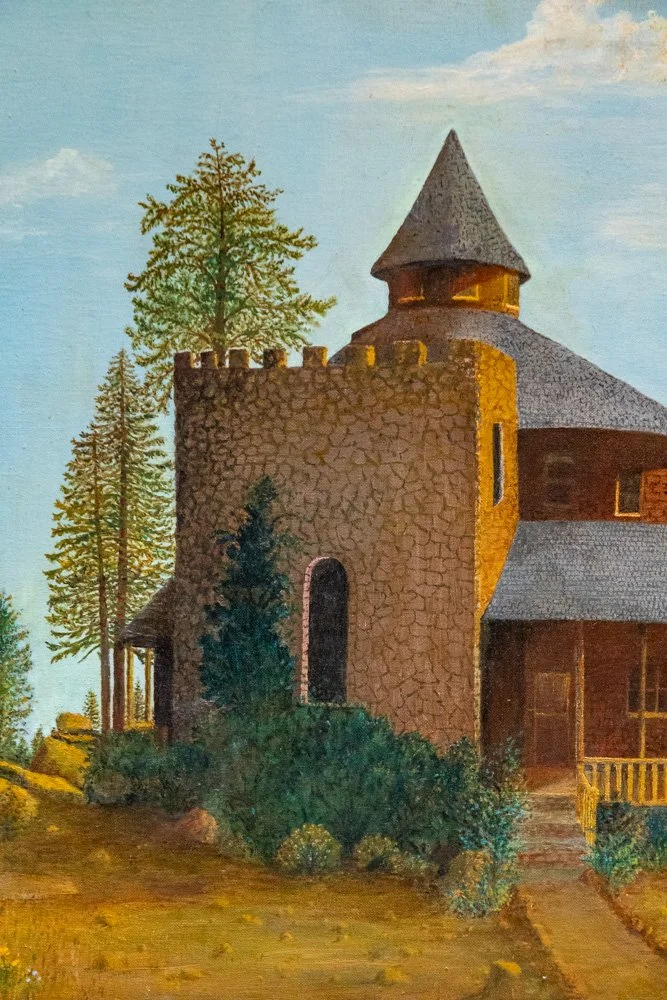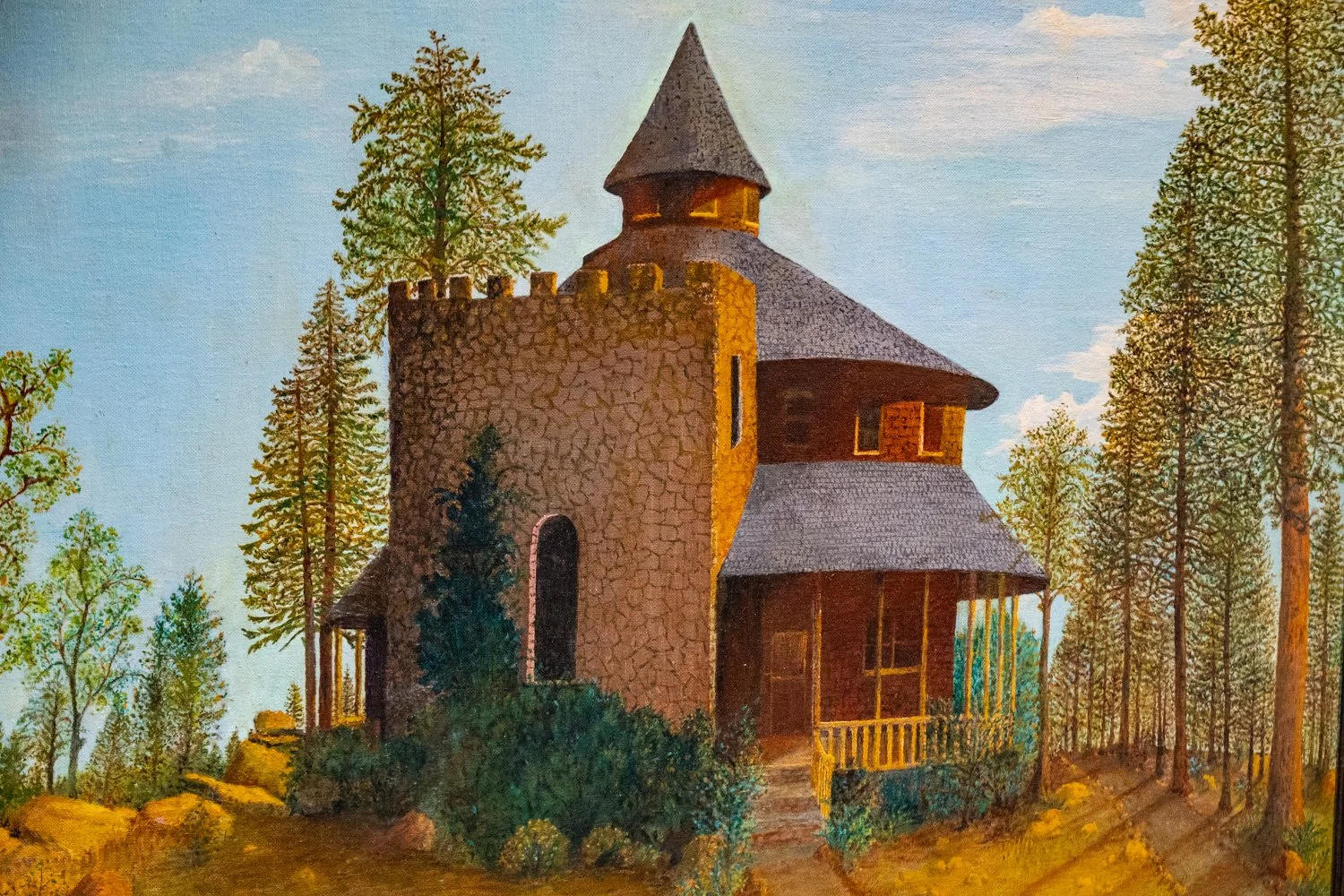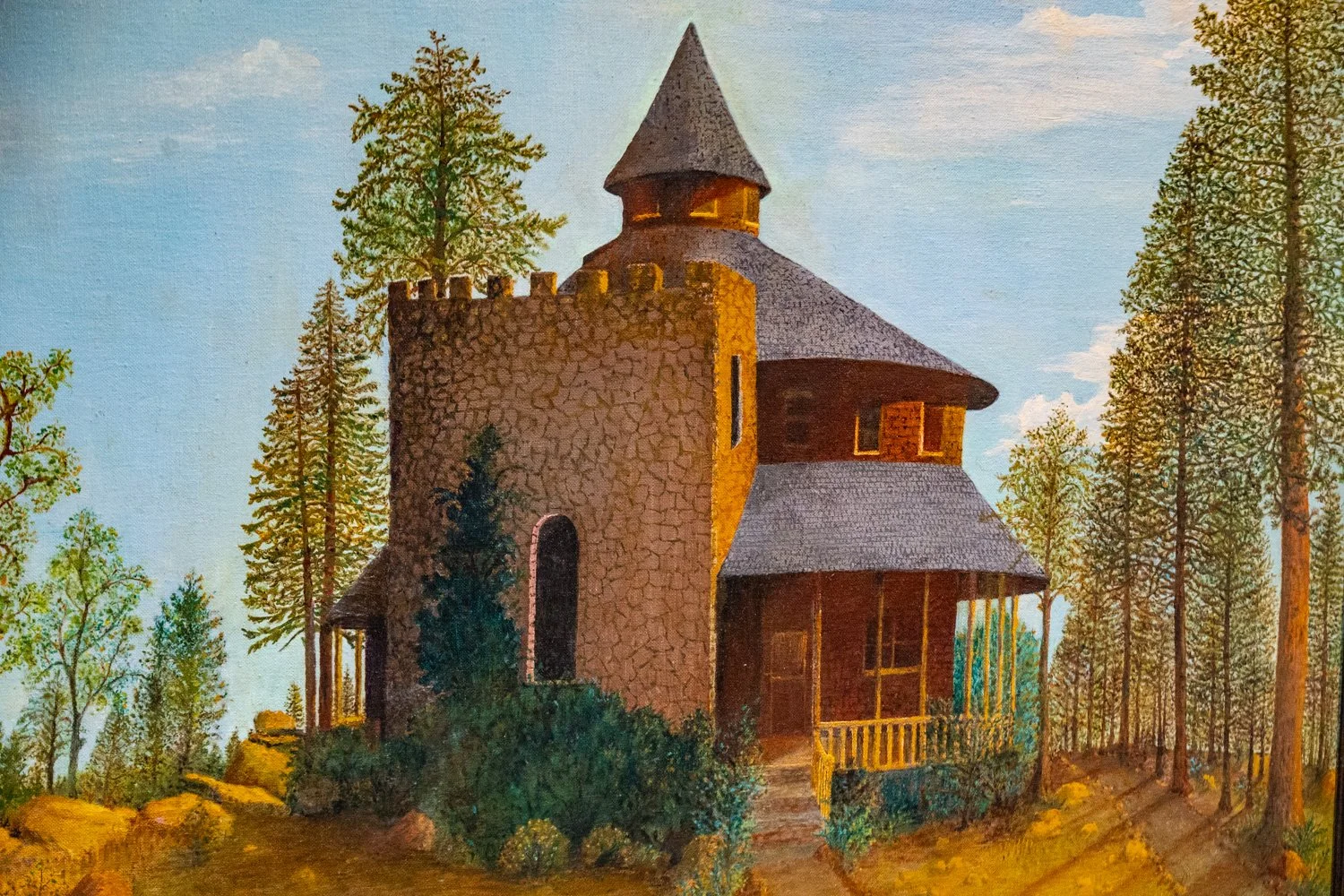
Painting of Noble Castle, also known as Noble Bungalow
Artifact of the Month Blog - August
1994.12.1 Gift of David Jensen
Amanda Kramp, Associate Curator of Collections and Exhibit
When I first came across this whimsical folk-art painting of the curiously shaped “castle” in the Collection, I had to know more about it. What I thought would be simple research about an artist turned into an unexpected journey through local history, Ancestry.com, and historic newspapers. Though honestly, that’s one of the best parts of museum work.
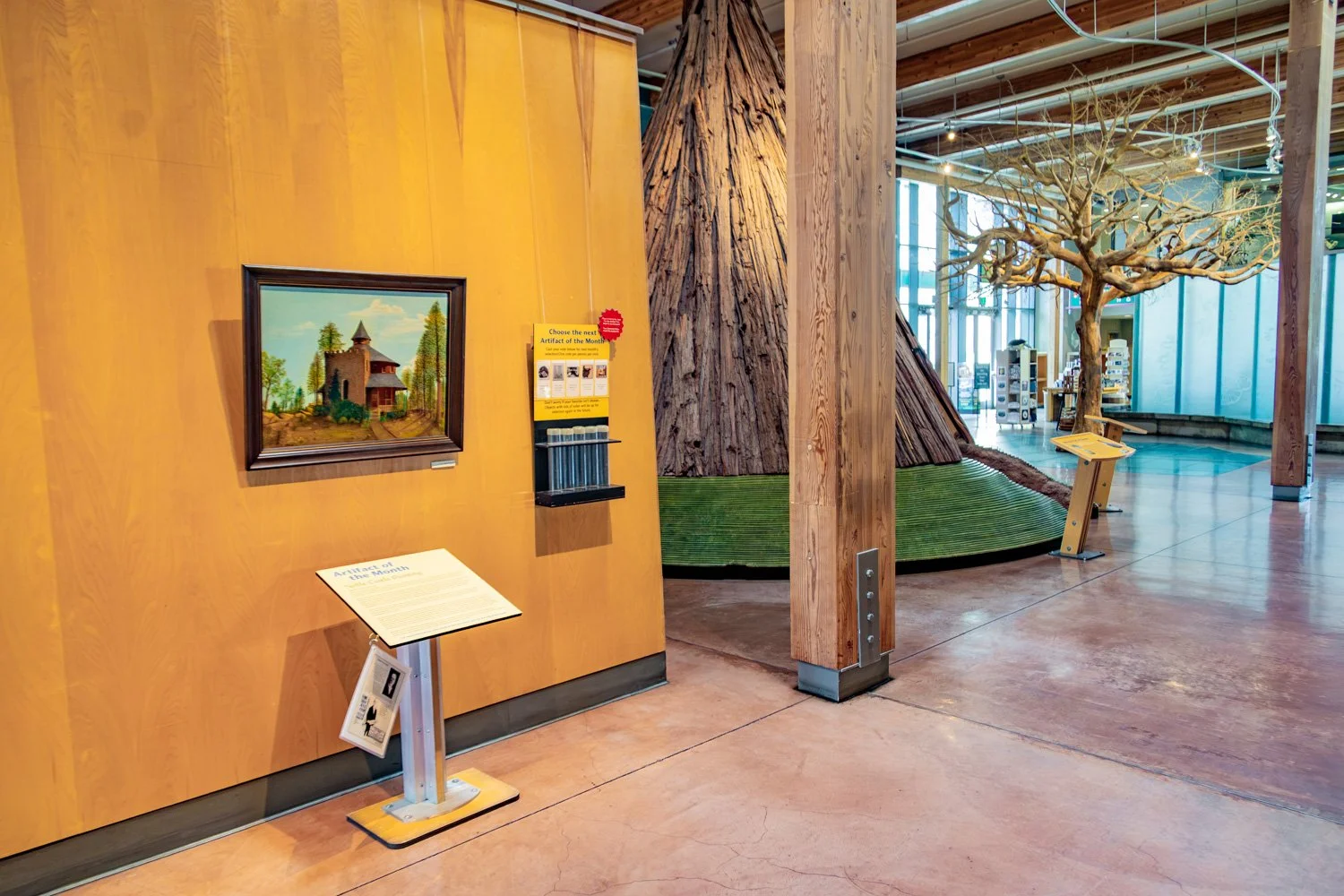
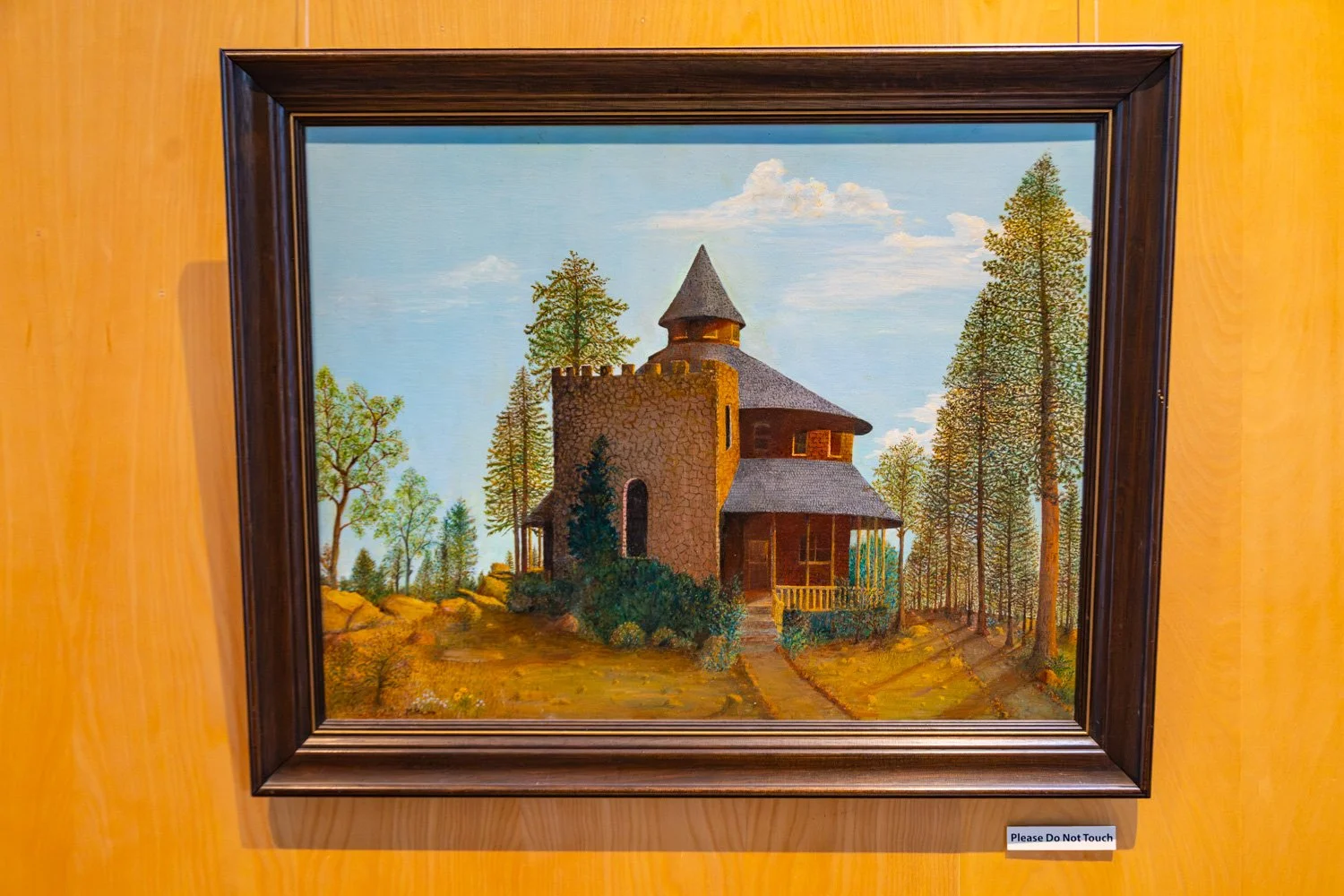
The painting was signed by M.M. Low. Museum documentation revealed M.M. Low was Mildred M. Low, she was from Red Bluff, and the painting was commissioned in 1972 by long-time PG&E employee David Jensen who hung it in his office until his retirement and donated it to the Museum in 1994. The donation came with an odd stipulation that the painting could be loaned back to him for historical presentations, but this condition did not extend to heirs or colleagues and would revert to standard conditions upon his death. In more than a decade as a museum professional, I’ve never come across a donation condition quite like this.
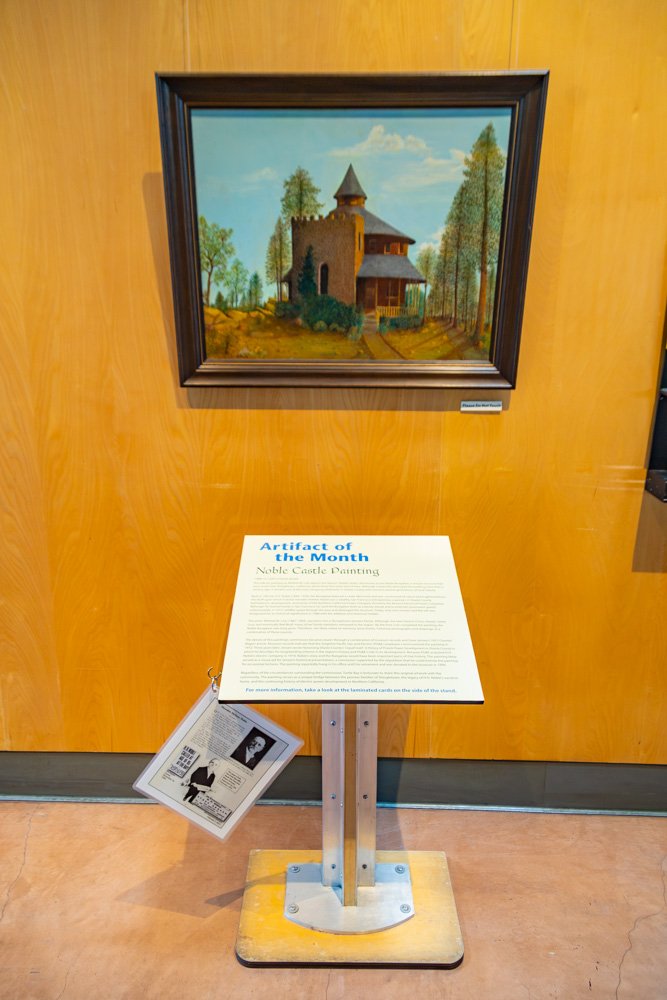
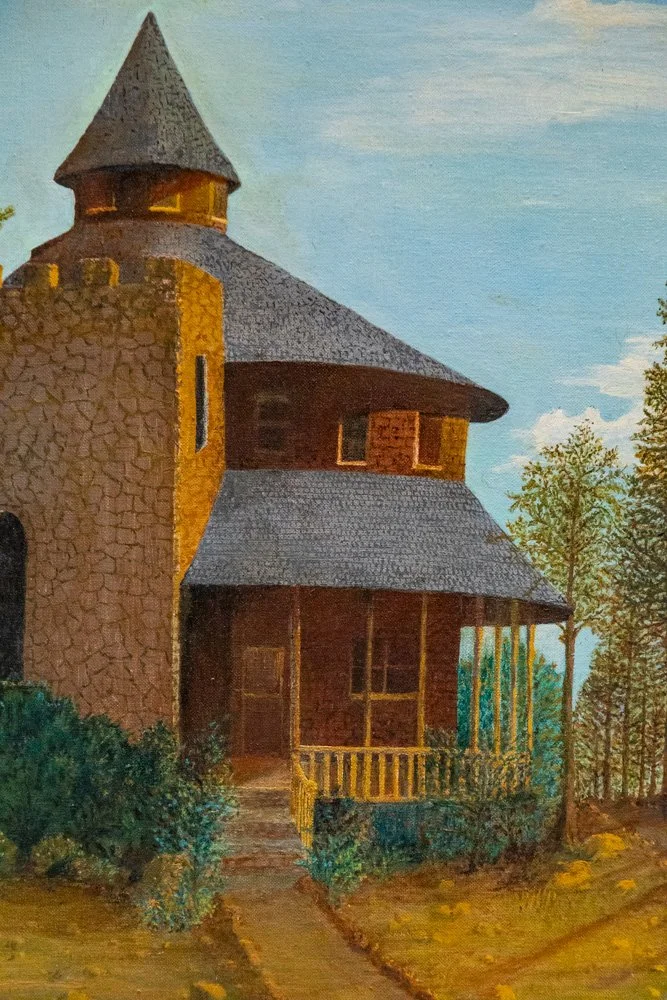
While I was hoping to uncover more about the artist, the subject of the painting more freely revealed itself. Noble Castle, called Noble Bungalow during its heyday, was built in Shingletown in 1903 from the native stone of the bluff on which it stood by H.H. Noble (1844-1929). Noble was a wealthy San Francisco entrepreneur, a pioneer in Shasta County hydroelectric development, and owner of the Northern California Power Company (formerly the Keswick Electrical Power Company). He built the Bungalow both as a family retreat and to entertain prominent guests. In 1917, wildfire swept through the area and destroyed the structure. Today, only ruins remain and the site was recognized for its historical significance in 1988 with the addition of a historical marker.
It was fairly straightforward to find information on the life of Hamden Holmes Noble (he was listed in the 1912 publication Men Who Made San Francisco, after all), but I was hard pressed to learn more details about M.M. Low, the artist. It took some time and digging, but I finally realized the fruits of my labor. I discovered Mildred Meta Cunningham (1887-1984) was born to Shasta County pioneers John Henry Cunningham and Cora Lee (Phelps) Cunningham, both natives of Missouri. Mildred attended Chico High School and graduated from the University of Hawaii. She married Scotsman James P. Low, who worked as a railroad engineer for the Ewa sugar plantation in Hawaii for 30 years. Following the Japanese attack on Pearl Harbor, they moved from Hawaii to Santa Cruz.
After James’ death in 1953, Mildred became involved in the Night Owls Radio Fan Club and traveled with composer and performer Mildred Lee. She also co-owned a Santa Cruz restaurant called Sally’s Kitchen and was a long-time member of the Order of the Eastern Star. Public records revealed a great deal about Mildred’s life, but they shed little light on her artistic pursuits, such as this Artifact of the Month painting. Aside from a few poems submitted to the Honolulu Star-Bulletin, few traces of her creative work have come to light.
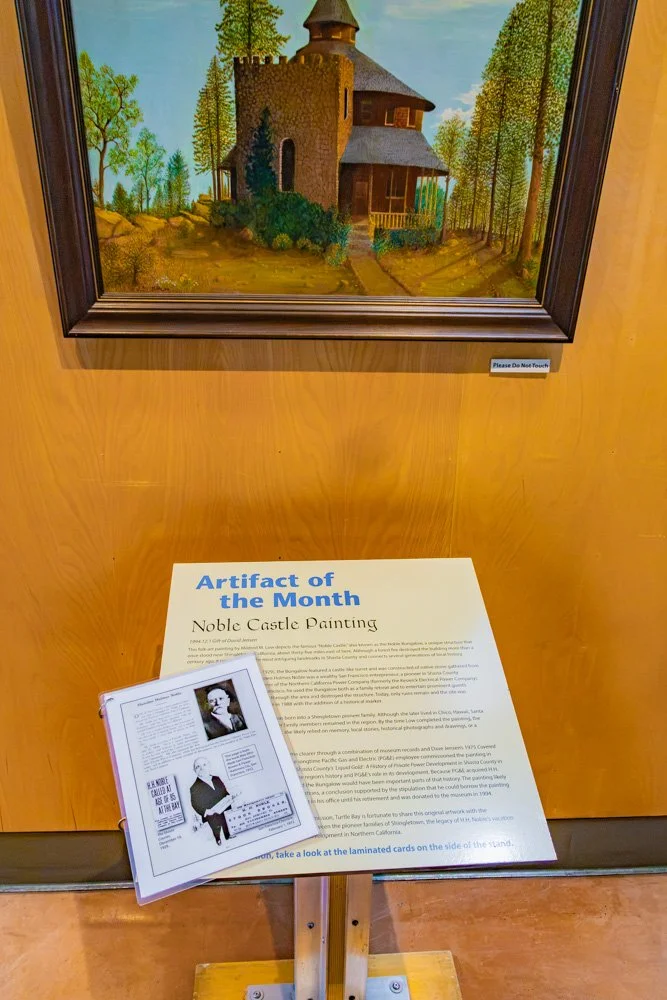
Two questions continued to nag me: How did David and Mildred know one another? And why did he commission the painting? The answer to the latter began to emerge when I considered the unique donation arrangement, the 1972 commission date, and David’s 1975 Covered Wagon article. Three years after the painting was commissioned, Jensen wrote Harvesting Shasta County’s ‘Liquid Gold’: A History of Private Power Development in Shasta County in which he describes his longstanding interest in the region’s history and PG&E’s role in its development. Because PG&E acquired H.H. Noble’s electric company in 1919, Noble and his Bungalow would have been important parts of that history. The painting likely served as a visual aid for Jensen’s historical presentations, a conclusion supported by the stipulation that he could borrow the painting for occasional lectures.
Although many questions about Mildred Low and her other artwork remain, the painting preserves an important and multifaceted view into Shasta County history and the people who valued it enough to keep its memory alive.
Visit the Museum during August to look through this fascinating window into Shasta County history and learn more about the characters in this story.